Mrs Ramsay’s death
To the LighthouseMrs Ramsay’s death is a sudden, offstage loss that divides the family’s life into before and after. The novel withholds its cause and nearly all circumstances, presenting the fact in a short bracketed notice; its force emerges instead through Mr Ramsay’s empty gesture, the family home’s gradual decay, and the later recollections that keep Mrs Ramsay present in the lives of those who remain.
Announcement and Immediate Aftermath
The death is disclosed in a parenthetical sentence: Mr Ramsay stumbles along a passage on a dark morning and stretches out his arms, but Mrs Ramsay has died suddenly the night before, leaving them empty. The compressed announcement follows a sequence of nights, storms, and natural change. Its abruptness makes the loss a fact rather than a staged death scene, while the image of the reaching arms gives that fact an immediate human consequence: Mr Ramsay’s familiar dependence on his wife meets her absence.
The narrative does not explain what caused her death. It does not describe an illness, a final conversation, or the family’s response at the moment. Years later, Mrs McNab recalls only that Mrs Ramsay died suddenly, and that the family had once planned to return but never came. The silence surrounding the event leaves its emotional weight to register through absence, recollection, and the changed condition of the house.
The House After Her Death
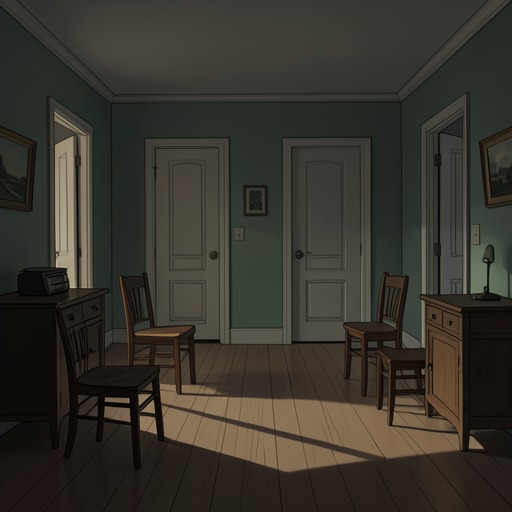
The empty house becomes the material aftermath of the loss. Its doors are locked, its mattresses rolled up, and its rooms left to wind, dust, damp, and gradual damage. Clothes remain in cupboards and bedrooms; Mrs McNab finds Mrs Ramsay’s old grey gardening cloak, boots and shoes, and a dressing table still holding a brush, comb, handkerchiefs, and ribbons. These things seem to preserve ordinary routines, as though their owner might return, even though Mrs McNab knows she will not.
Mrs McNab remembers Mrs Ramsay in the grey cloak, coming up the drive with the washing and a child beside her. The recollection gives the surviving objects a human context: they belong to the daily life of a household once animated by Mrs Ramsay’s presence. Yet memory cannot restore that life. The family has stayed away for years, sending money but not writing or visiting, while the house and garden fall into disrepair.
Loss in a World That Continues
The death is set against natural cycles that continue without regard for human grief. Night gives way to morning; autumn trees gleam and the sea laps at the shore; later, spring and summer arrive. The text briefly allows a scene of calm and apparent wholeness, then withdraws it, as weather and darkness return. This pattern makes nature neither a remedy for bereavement nor a participant in it: its beauty persists alongside loss, without answering it.
That indifference becomes explicit in the reflection on whether nature completes what human beings begin. The imagined hope of finding, in solitude by the sea, an answer or a sense of shared purpose is exposed as an illusion, a reflection that breaks. Mrs Ramsay’s death therefore belongs to a wider structure in which consoling expectations repeatedly encounter the world’s lack of response.
Family and Historical Consequences
Mrs Ramsay’s death occurs within a sequence of losses and changes that the narrative conveys in compressed notices. Prue Ramsay marries and then dies that summer from an illness connected with childbirth. Later, a shell explodes in France, killing Andrew Ramsay and other young men; the war’s violence enters the family’s story without a developed battlefield scene. These events are distinct, but their clipped presentation places private bereavement within the larger passage of years and historical upheaval.
The family’s absence from the house is one consequence that remains visible. Mrs McNab believes they may never return and observes that the home has stood without a soul in it. When Lily Briscoe arrives in September with Mr Carmichael, the house is occupied again, but this return does not reverse the death or recover the household as it was. The delay between loss and return makes the house a record of time passed as well as a place of remembered life.
Memory and Narrative Form
The novel gives Mrs Ramsay’s death significance through its form as much as through the event itself. A parenthetical announcement interrupts the expansive account of night, weather, and the empty house, withholding the scenes conventionally used to explain or dramatize a death. The reader encounters the irreversible fact in the same stark manner in which the survivors must live with it: suddenly, and without a consoling account of why.
Later, Lily understands that Mr Carmichael changed after hearing of Andrew Ramsay’s death, though she cannot specify what he did or felt. Her perception of him as someone known through an outline rather than through intimate detail echoes the novel’s treatment of bereavement: loss is certain, but another person’s inward experience remains only partly accessible. Mrs Ramsay’s absence is likewise conveyed through gestures, objects, and remembered scenes, making the continuing work of memory—not a narrated final moment—the event’s lasting presence.